-
- Shade Trees
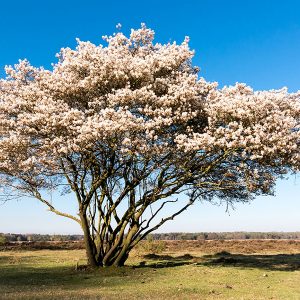
Amelanchier, Allegheny Serviceberry
- $23.00 – $56.00
- A small multi-stemmed tree blooming in early spring with white flower clusters, followed by edible, purplish blue fruit later in the season. Birds love the berries.
- Select options
-
- Shade Trees
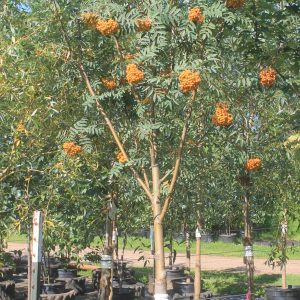
Ash, European Mountain
- $90.00 – $255.00
- A small tree with spreading branches and fairly dense foliage. White flowers in spring, and the showy orange-red fruits of late summer persist into winter and are favored by the birds.
- Select options
-
- Shade Trees
Birch, Heritage River
- $105.00 – $245.00
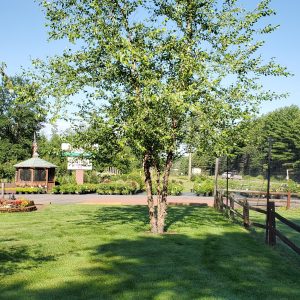
- A native birch of the river bottoms but does well on upland soils. Reddish brown exfoliating bark. Interesting winter effect. Resistant to the bronze birch borer.
- Select options
-
- Shade Trees
Birch, Little King River Birch
- $1.00
- Dense, compact river birch. Great for planting areas where height is limited.
- Select options
-
- Shade Trees
Birch, Parkland Pillar
- A beautiful birch with a narrow, upright, and dense habit. Very fast growing and very hardy.
- Read more
-
- Shade Trees
Birch, Renaissance Oasis Paper
- A disease resistant white paper birch. Has a dense, broad, and pyramidal form with dark green leaves that turn yellow in the fall.
- Read more
-
- Shade Trees
Birch, Whitespire Japanese
- $105.00 – $245.00
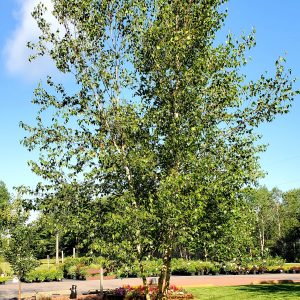
- Upright, pyramidal habit. Medium to fast grower. Adaptable to wide range of soils, including hot, dry sites. Thrives in full sun. Tolerates temperatures -30° to 120° F. White bark, dark green leaves turning yellow in fall. Highly resistant to bronze birch borer under good fertility program. 3-4 stem clumps.
- Select options
-
- Shade Trees
Elm, New Horizon
- With dark green leaves that turn red in the fall, this tree makes a great shade tree for boulevards or for your yard.
- Read more
-
- Shade Trees
Lilac, Ivory Silk Japanese Tree
- Large creamy white flowers against dark green leaves cover this tree. It also has a compact growth habit.
- Read more
-
- Shade Trees
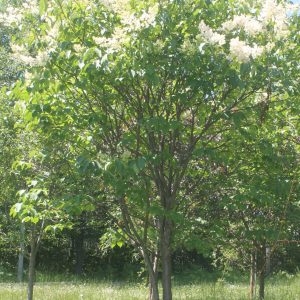
Lilac, Japanese Tree
- $23.00 – $56.00
- Creamy white flowers in large panicles in June and July. Handsome foliage. Useful as a small specimen tree or large shrub. Desires full sun.
- Select options
-
- Shade Trees
Linden, American Sentry
- $90.00 – $215.00
- Beautiful Linden with uniform and upright narrow form.
- Select options
-
- Shade Trees
Linden, Greenspire
- Growing with an oval growth habit and a straight trunk. Has dark green foliage and makes a great tree to plant near the street.
- Read more
-
- Shade Trees
Maple, Autumn Blaze
- $90.00 – $255.00
- A fast growing maple with beautiful red fall color. Very drought tolerant.
- Select options
-
- Shade Trees
Maple, Firefall
- Foliage emerges medium green throughout the summer and ends the year with beautiful orange-scarlet fall color. Has an upright oval growth habit.
- Read more
-
- Shade Trees
Maple, Matador
- This fast growing shade tree finishes out the season with a superior, deep red fall color.
- Read more
-
- Shade Trees
Maple, Northwood
- Starts the growing season with dark green leaves and finishes with beautiful bright orange to red fall color. This is an excellent shade tree.
- Read more
-
- Shade Trees
Maple, Sienna Glen
- $90.00 – $255.00
- A fast growing maple with excellent branching and very hardy. Beautiful fall color from red to burgundy red.
- Select options
-
- Shade Trees
Maple, Silver
- $80.00 – $230.00
- Fast growing, graceful form. Medium shade. Leaves are light green above and silver beneath. Very hardy and will tolerate extreme conditions.
- Select options
-
- Shade Trees
Maple, Sugar
- $90.00 – $255.00
- The largest and finest of our native maples. Great economic value in lumber, syrup, and sugar. Wonderful shade tree. Rich autumn foliage color ranging from orange to peach. Very hardy.
- Select options
-
- Shade Trees
Oak, Kindred Spirit
- Grows in a columnar shape that only gets 6' wide. Dark green foliage that turns a yellow color in the fall.
- Read more
-
- Shade Trees
Oak, Northern Red
- $90.00 – $255.00
- A fast growing native tree. Dark green leaves change in autumn to a deep reddish brown, persisting into winter.
- Select options
-
- Shade Trees
Oak, Swamp White
- This long lived tree is native to Wisconsin and has a reddish brown fall color.
- Read more
-
- Shade Trees
Serviceberry, Autumn Brilliance
- $90.00 – $125.00
- A very popular tree with showy white flowers in spring followed by sweet purplish-blue fruit. Heavily branched tree with light gray bark. Fall color is brilliant red-orange.
- Select options
-
- Shade Trees
Willow, Prairie Cascade
- $80.00 – $105.00
- A very hardy weeping willow with glossy, dark green leaves and golden bark.
- Select options